Operating Condition Guide: Tungsten Carbide Wear Parts for Abrasion, Impact & High-Temperature Environments
Full Article Structure
- 1. Introduction: Carbide Wear Parts For Three Main Harsh Operating Conditions
- 2. Carbide Parts For Pure Abrasion Operating Condition
- 3. Carbide Parts For Impact + Abrasion Mixed Condition
- 4. Carbide Parts For Continuous High Temperature Operating Condition
- 5. Customer Case: Slurry Pump Carbide Bush For Sand Abrasion
- 6. FAQs About Carbide Wear Parts Selection
- 7. Summary: Match Carbide Wear Parts To Your Operating Condition
1. Introduction: Carbide Wear Parts For Three Main Harsh Operating Conditions
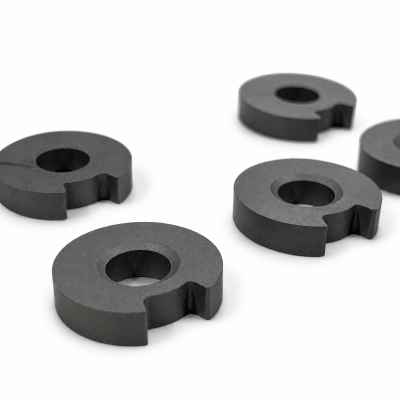
Besides cutting tools, tungsten carbide is widely used as wear resistant components. The working environment can be sorted into three core operating conditions: pure abrasive erosion, impact plus abrasion, long-time high temperature. Different environments require different carbide grade, structure and surface treatment.
2. Carbide Parts For Pure Abrasion Operating Condition
Pure abrasion scenarios include slurry conveying, sand blasting, grain processing. The main failure mode is gradual abrasive wear without obvious impact. We recommend low cobalt, ultra-fine grain carbide grades. This formula delivers high hardness and excellent wear resistance to slow down material loss.
3. Carbide Parts For Impact + Abrasion Mixed Condition
Many mining, crushing and agricultural parts face both impact and abrasion. If you only chase high hardness, the part will crack under shock. Medium grain carbide with moderate cobalt content balances toughness and wear resistance, the most popular choice for this mixed working condition.
4. Carbide Parts For Continuous High Temperature Operating Condition
High-temperature working conditions include hot rolling, high-temperature extrusion and thermal forming. Ordinary carbide will soften and oxidize under long-term heat. Grades with TaC or NbC additives are preferred. These inhibitors raise the recrystallization temperature and keep stable hardness without rapid deformation. Thermal stability becomes the top priority here, not just raw hardness.
5. Customer Case: Slurry Pump Carbide Bush For Sand Abrasion
A customer in mineral processing used stainless steel bushes for sand slurry pumps. Solid particles continuously scoured the inner surface, and bushes needed replacement every 10 days.
We switched to custom ultra-fine grain low-cobalt carbide bushes with precision inner hole finish. After installation, the service life jumped to 8 months. Unplanned downtime and spare part cost dropped sharply. No big impact existed in this case, so maximum wear resistance was the right direction.
6. FAQs About Carbide Wear Parts Selection
Q1: Can one carbide grade work for both slurry abrasion and rock impact?
Hardness and toughness trade-off still applies. Pure abrasion grade is brittle for heavy impact. Mixed condition needs a balanced grade.
Q2: Is surface polishing helpful for abrasive wear parts?
Yes. Polished surface reduces friction and particle adhesion, especially for slurry and liquid medium.
Q3: Can you make non-standard carbide wear parts with special dimensions?
Yes, we support custom mould pressing, sintering and finish machining for wear components.
7. Summary: Match Carbide Wear Parts To Your Operating Condition
For wear parts, judge your working condition first: abrasion only, impact-abrasion mix, or sustained high heat. Send us your medium, temperature, impact frequency and drawing, we can recommend the correct carbide grade and manufacturing plan.
CTA Contact Zone
Wear Part Grade Consultation
📧 Contact Us → /contact-us.htm
Share your wear environment and part drawing, we recommend suitable carbide grade.
Custom Carbide Wear Component Quote
📧 Contact Us → /contact-us.htm
We provide custom sintered carbide wear parts for abrasion, impact and high-temperature service.
Disclaimer
Grade suggestions are for reference. Field trial under your actual operating condition is required before mass production.