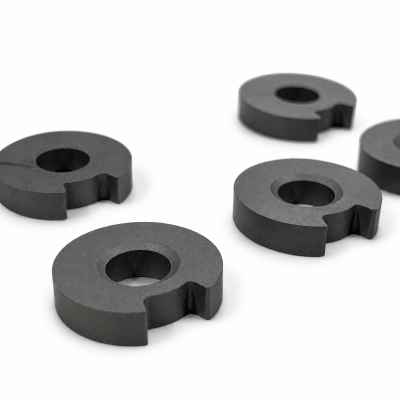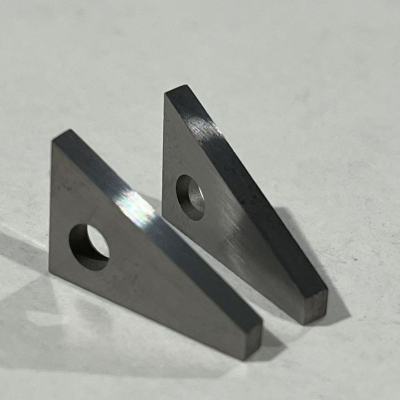
Production Process of Custom Machined Tungsten Carbide Blades
Full Article Structure
- 1. Introduction: The Full Manufacturing Chain of Custom Carbide Blades
- 2. Powder Mixing, Pressing and Sintering Process
- 3. Precision Machining, Edge Honing and Surface Treatment
- 4. Production Case: Custom Carbide Blade for Scrap Metal Recycling
- 5. Final Inspection & Packing Before Delivery
- 6. FAQs About Carbide Blade Production Process
- 7. Summary: Stable Process Ensures Consistent Blade Performance
1. Introduction: The Full Manufacturing Chain of Custom Carbide Blades
Custom machined tungsten carbide blades are not only ground from ready-made blanks. The whole process starts from WC-Co powder formula design, compacting and vacuum sintering, then enters precision machining, edge preparation and quality inspection. Every stage can be adjusted to match your custom design and cutting load.
2. Powder Mixing, Pressing and Sintering Process
| Process Step | Core Control | Impact |
|---|---|---|
| Powder Ball Milling | Uniform mixing of WC powder and cobalt binder | Guarantee consistent hardness and wear resistance |
| Dry Pressing | Controlled pressing density, uniform green body | Avoid deformation and internal pores after sintering |
| Vacuum Sintering | Temperature holding time, carbon balance control | Determine final density, grain structure and toughness |
3. Precision Machining, Edge Honing and Surface Treatment
- Blank rough grinding: remove sintering skin and reach basic dimension
- Form grinding / EDM: shape special cutting profile and mounting holes
- Edge honing: eliminate micro grinding cracks on cutting edge
- Polishing / coating: improve surface property according to demand
Sintering determines the base material property, while post machining directly decides the cutting performance of the finished blade.
4. Production Case: Custom Carbide Blade for Scrap Metal Recycling
One recycling equipment manufacturer needed custom carbide blades for crushing scrap steel. The initial sample had frequent edge breakage. We checked the production flow and found the sintering temperature was set for normal wear-resistant blades, not for heavy impact crushing.
We adjusted the sintering holding curve to optimize cobalt phase distribution, then added a controlled chamfer honing process on cutting edges. After process adjustment, the blade impact toughness improved greatly, and the service life increased by more than 60% under the same crushing condition.
5. Final Inspection & Packing Before Delivery
Finished blades go through dimension inspection, hardness test, surface visual check and edge inspection. For high-impact custom blades, we add ultrasonic non-destructive testing. Qualified parts are packed with anti-collision protection to avoid edge damage during transit.
6. FAQs About Carbide Blade Production Process
Q1: Can we change sintering parameters for the same WC-Co grade?
Yes, sintering curve can be adjusted to balance hardness and toughness for your application.
Q2: Is honing a mandatory step for custom cutting blades?
It is highly recommended for interrupted cutting and impact cutting to reduce edge chipping risk.
Q3: How long is the whole production cycle for custom carbide blades?
Sample cycle is about 7-12 days, mass production lead time depends on batch quantity and complexity.
7. Summary: Stable Process Ensures Consistent Blade Performance
Every step in carbide blade production links closely together. A stable, repeatable production workflow is the foundation to get consistent quality for your custom inserts and blades. If you have special working conditions, we can adjust the whole process route from powder formula to final grinding.
CTA Contact Zone
Custom Process Consultation
📧 Contact Us → /contact-us.htm
Share your cutting condition, we adjust the production process for your custom carbide blades.
Sample Production Arrangement
📧 Contact Us → /contact-us.htm
We arrange sample production with full process record for your validation.
Disclaimer
Production parameters are for reference. Final process setting will be confirmed according to your drawing and cutting test feedback.