Rleey | Tungsten Carbide Precision Machining | Grinding, EDM & Polishing Services
Precision Machining of Tungsten Carbide: Grinding, EDM & Polishing Capabilities
Table of Contents
Tungsten carbide is extremely hard and wear-resistant, which makes it ideal for tooling and wear parts, yet difficult to machine. Sintered carbide blanks cannot be cut by conventional milling or turning tools. Precision shaping relies on three core technologies: grinding, EDM and polishing.
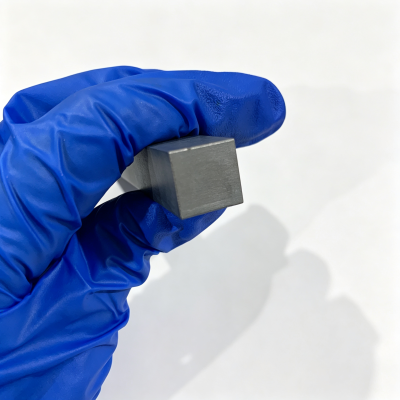
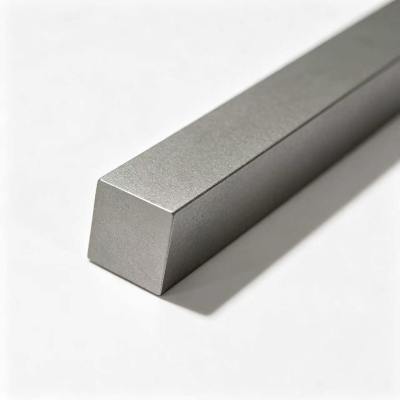
Each machining method has unique limits on accuracy, surface roughness, cost and processing speed. Choosing the wrong process may cause surface cracks, residual stress, poor dimensional tolerance or extra cost. This article breaks down our machining capabilities for carbide parts and helps buyers define proper manufacturing requirements for their projects. Grinding is the most widely used carbide machining process. Diamond grinding wheels are used to remove material from sintered carbide blanks. Common grinding types include surface grinding, cylindrical grinding, centerless grinding and internal grinding. Grinding delivers tight dimensional accuracy and good surface quality. It is the preferred choice for outer diameters, flat surfaces, rod blanks and simple die profiles. Coolant must be applied sufficiently to avoid thermal cracks. Heavy grinding passes will introduce residual stress, so fine finishing always uses small stock removal. Grinding works best for regular geometries. For complex internal shapes, sharp narrow slots or tiny holes, grinding becomes difficult and inefficient. EDM (Electrical Discharge Machining) removes material by controlled electrical sparks between electrode and workpiece. Since EDM works on conductive materials, tungsten carbide is perfectly suitable. There are two main EDM types: wire EDM and sinker EDM. Wire EDM uses a thin brass wire to cut through carbide blank. It is used for 2D profiles, slit cutting, blanking dies and thin carbide slices. It can create sharp internal corners that grinding cannot achieve. Sinker EDM uses a shaped electrode to sink cavities, complex 3D profiles and deep blind holes inside carbide dies. One key limitation of EDM: sparking creates a thin recast layer on the machined surface. This layer is brittle and may contain microcracks. For high-load cold forging dies, the recast layer must be removed by subsequent grinding or polishing to avoid early fatigue failure. Polishing is a post-machining process to reduce surface roughness after grinding or EDM. It ranges from basic fine polishing to mirror finish. We use diamond abrasives of gradually finer grits for hand polishing or mechanical polishing. Polished carbide surfaces reduce friction during metal forming, prevent material adhesion and extend die service life significantly. Wire drawing dies and cold forging pin cores usually require mirror polishing. Polishing does not change part dimensions much; it only removes tiny surface peaks and defects. Polishing cost rises sharply for ultra-high mirror finish and complex internal cavities. Buyers should specify Ra value clearly on drawings instead of only writing "polished". For simple round rods, flat wear plates and outer cylindrical surfaces: diamond grinding is the primary choice, offering stable tolerance and good surface integrity. For intricate 2D profiles, narrow slits, custom shaped die inserts: wire EDM is suitable, followed by grinding to remove recast layer. For deep cavities and 3D shaped cold forging dies: sinker EDM plus post finishing. For wire drawing dies, pin cores and forming tools where metal flow touches the surface: polishing is required after grinding or EDM. In many cases, parts need a combination of processes, for example: EDM rough shaping + grinding remove recast layer + final mirror polishing. A: Not recommended. The EDM recast layer is brittle. For cyclic loaded cold forging dies, you need grinding or polishing to remove the recast layer after EDM. A: Mirror polishing can reach Ra 0.005μm, widely used for wire drawing dies and precision forming components. A: Only conductive cemented WC-Co carbide works for EDM. Carbide without cobalt binder is non-conductive and cannot be processed via EDM.2. Grinding for Tungsten Carbide
3. EDM Machining: Wire EDM & Sinker EDM
4. Polishing for High Surface Finish
5. Process Comparison Table
Machining Method
Typical Surface Roughness
Strength
Limitations
Diamond Grinding
Ra 0.05 ~ 0.4 μm
High accuracy, no recast layer
Hard for complex cavities, sharp inner corners
Wire / Sinker EDM
Ra 0.2 ~ 1.6 μm
Complex profiles, thin slots, small holes
Brittle recast layer on surface
Polishing
Ra 0.005 ~ 0.1 μm (mirror)
Ultra-smooth surface, low friction
Only post-treatment, high cost for complex shapes
6. How to Choose the Right Machining Method
7. Common Machining Pitfalls & Preventive Measures
8. FAQ
Q1: Can EDM be used as final finish for carbide cold forging dies?
Q2: What surface finish can carbide mirror polishing achieve?
Q3: Can all carbide grades be machined by EDM?