Tungsten Carbide Component Customization: How We Match Drawings for Industrial Clients
Full Article Structure
1. When Do You Need Custom Tungsten Carbide Parts?
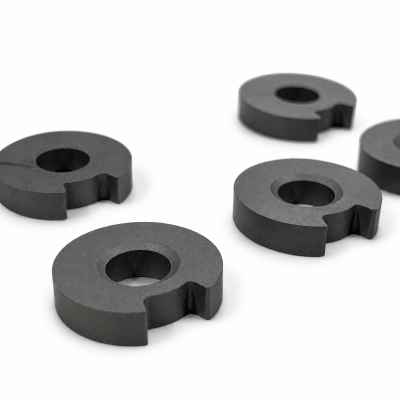
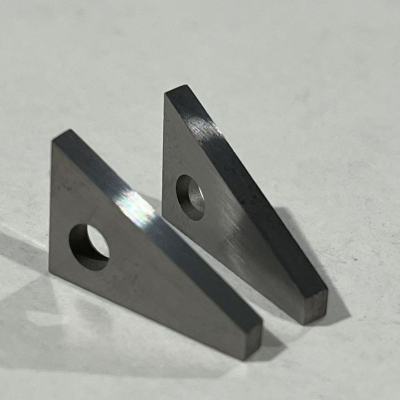
Standard carbide rods, inserts and blades cover many machining jobs. But custom carbide components become necessary when your application has unique geometry, special wear demands or non-standard sizes. Typical scenarios include:
- Wear sleeves, nozzles, valve seats and seal rings for oil, chemical and mining equipment
- Custom punches, dies, forming inserts for stamping and moulding
- Special slitting knives, guide wheels and feed rollers
- Components with holes, grooves, steps or complex profiles that off-the-shelf items cannot match
2. Our Standard Customization Workflow
- Drawing review: Our engineering team checks dimensions, tolerances, wall thickness and manufacturability.
- Grade recommendation: Match WC-Co grade based on impact load, abrasion and working temperature.
- Forming: Die pressing, cold isostatic pressing for simple or complex preforms.
- Sintering: High-temperature vacuum sintering, optional HIP treatment to reduce internal porosity.
- Precision processing: Diamond grinding, wire EDM, polishing as required.
- Inspection: Dimension check, density, hardness test, surface quality control.
- Packing & delivery: Anti-collision packaging with test reports attached if requested.
3. Drawing & Sample Requirements for Quotation
To give you an accurate price and lead time, please prepare one of the following:
- 2D drawings (PDF / DWG / DXF) with tolerance and surface roughness marked
- 3D files: STEP, IGES, STP
- Physical sample you send us for reverse engineering
Also tell us working conditions: workpiece material, impact frequency, expected service life and order quantity. This helps us avoid material grade mismatch.
4. Tolerance, Surface Finish & Available Processing
| Process | Typical Tolerance | Surface Roughness Ra |
|---|---|---|
| Sinter blank only | ±0.05 ~ ±0.15 mm | Ra 1.6 ~ 3.2 μm |
| Fine grinding | ±0.003 ~ ±0.01 mm | Ra 0.2 ~ 0.8 μm |
| Mirror polishing | ±0.002 mm | Ra 0.02 ~ 0.1 μm |
| Wire EDM | ±0.005 mm | Ra 0.8 ~ 1.6 μm |
5. Common Customization Mistakes to Avoid
- Over-tight tolerance: Unnecessary ultra-tight tolerance raises cost and extends lead time.
- Too thin wall design: Thin carbide sections are easy to crack during sintering or grinding.
- Wrong grade selection: High-hardness fine grain grades are brittle for heavy impact jobs.
- Ignoring sinter shrinkage: Leave proper grinding allowance for sintered blanks.
6. FAQ for Carbide Custom Orders
Q1: What is the MOQ for custom carbide parts?
We accept small prototype orders and mass production. MOQ depends on mould cost and part size. Some simple blanks support 1pc sample.
Q2: How long is the lead time?
Simple blanks: 7–12 working days. Parts with grinding, EDM or polishing: 15–25 working days. Samples are usually faster.
Q3: Can you keep my drawing confidential?
Yes, we respect customer drawing confidentiality and will not share your design with third parties.
7. Summary
Custom tungsten carbide components solve special wear and machining challenges that standard products cannot cover. Clear drawings, correct grade selection and reasonable tolerance setting are the three keys to a successful custom project. Send your drawings or samples to us, and our engineers will review and offer a tailored solution.
CTA Contact Zone
Send Your Drawings for Evaluation
📧 Contact Us → /contact-us.htm
Attach your 2D/3D files, note quantity and working conditions, we will reply with quotation and lead time quickly.
Sample Testing Available
📧 Contact Us → /contact-us.htm
We provide custom carbide samples for performance verification before bulk orders.
Disclaimer
Final performance depends on application environment, assembly method and operating parameters. Sample testing is strongly recommended before mass production. Tolerances can be adjusted according to actual production feasibility after drawing review.