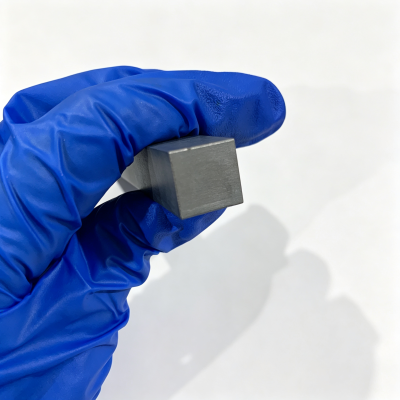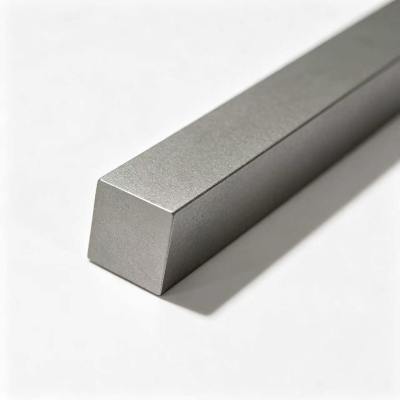
Why In-house Machining Helps Stabilize Tolerance for Your Carbide Tool Blanks
Full Article Structure
- 1. Introduction: Tolerance Fluctuation Ruins Tooling Consistency
- 2. Why Outsourced Machining Causes Unstable Tolerance
- 3. Core Advantages of VUILI In-house Machining
- 4. VUILI Full In-house Machining Workflow for Carbide Blanks
- 5. Machining Method & Tolerance Stability Comparison Table
- 6. FAQ About Carbide Blank Tolerance Control
- 7. Summary & Precision Carbide Blank Service
1. Introduction: Tolerance Fluctuation Ruins Tooling Consistency
Many carbide suppliers only provide sintered blanks and outsource grinding and finishing processes. Multi-factory cross-processing leads to inconsistent dimensional tolerance, poor roundness and ununiform edge precision. For mass industrial piercing and cutting tools, tiny tolerance errors will accumulate, causing jamming, poor hole quality and short tool life. In-house machining solves this problem by controlling every processing step internally, delivering ultra-stable carbide tool blanks for precision tooling projects.
2. Why Outsourced Machining Causes Unstable Tolerance
Outsourced carbide finishing faces many uncontrollable variables. Different processing factories use different grinding equipment, tool abrasives and operating standards. Sintered blank batches with slight density differences will produce larger tolerance deviations after external processing. Lack of unified inspection standards also leads to mixed qualified and unqualified products in one batch, greatly increasing customer assembly risks.
3. Core Advantages of VUILI In-house Machining
- Unified equipment and processing standards to eliminate batch tolerance deviation
- Real-time adjustment of grinding parameters according to carbide blank hardness and density
- One-stop production from sintering, fine grinding, honing to finished inspection
- Strict control of roundness, straightness and tip concentricity for high-precision pins
- Fast correction and low defect rate for customized tolerance requirements
4. VUILI Full In-house Machining Workflow for Carbide Blanks
After high-temperature sintering, all carbide blanks are screened for density and hardness first. Qualified workpieces enter our internal grinding workshop for outer diameter finishing, tip forming and edge honing. Our technicians adjust feed speed and grinding precision according to product application scenarios. After processing, finished parts go through dimensional testing and surface inspection before packaging, ensuring every batch maintains stable tolerance performance.
5. Machining Method & Tolerance Stability Comparison Table
| Processing Mode | Tolerance Stability | Suitable Application |
|---|---|---|
| Full in-house machining | High, ultra-stable batch consistency | Precision piercing, automated assembly tooling |
| Partial outsourced finishing | Medium, slight batch deviation exists | General industrial cutting and forming |
| Only as-sintered without grinding | Low, large tolerance range | Low-cost, low-precision mass piercing |
| Third-party full processing | Unstable, hard to control batch difference | Non-critical rough tooling parts |
6. FAQ About Carbide Blank Tolerance Control
Q1: What tolerance can your in-house grinding achieve?
We can achieve high-precision dimensional tolerance and excellent concentricity for carbide pins and rods, fully meeting automated equipment assembly and precision piercing requirements.
Q2: Can you customize special tolerance standards?
Yes. We support customized tight tolerance processing for special tooling scenarios and provide batch inspection reports.
Q3: Does in-house machining increase cost greatly?
For high-precision projects, it greatly reduces defect and replacement cost. For regular products, we keep balanced and competitive unit price.
7. Summary & Precision Carbide Blank Service
In-house integrated machining is the core guarantee for stable tolerance of tungsten carbide tool blanks. VUILI realizes full-process independent production from sintering to precision finishing, avoiding tolerance deviation caused by multi-party outsourcing. Whether you need low-cost as-sintered parts or high-precision ground carbide blanks, we provide matched processing solutions. Send your tolerance and drawing requirements for accurate quotation.
CTA Contact Zone
High Tolerance Stability Carbide Blanks
📧 Contact Us → /contact-us.htm
Send your tolerance requirement for precision carbide blank processing.
In-house Custom Carbide Machining Service
📧 Contact Us → /contact-us.htm
Get stable-batch carbide tool blanks for your industrial tooling.
Disclaimer
The application guidance is for technical reference. Tolerance standards should be confirmed according to your equipment and production process. VUILI provides customized in-house machining solutions to match your precision and cost demands.