Rleey | Carbide Tip vs Solid Carbide: Industrial Cutting Tool Pros & Cons
Carbide Tip vs Solid Carbide: Pros and Cons for Industrial Cutting Tools
Table of Contents
- Introduction
- What Is a Carbide Tip (Brazed Carbide Tip)?
- What Is Solid Carbide Cutting Tool?
- Carbide Tip vs Solid Carbide Comparison Table
- Carbide Tipped Tools: Advantages & Limitations
- Solid Carbide Tools: Advantages & Limitations
- How to Pick for Your Cutting Application
- Typical Failure Modes & Troubleshooting
- FAQ
Introduction
When sourcing carbide cutting blades, slitter knives and shredder cutters, international buyers often face a core choice: carbide tipped tools or solid carbide tools. Both use tungsten carbide as the cutting material, but their structure, cost, working limits and service behavior are very different.
A carbide tipped tool uses a low-carbon steel or HSS body, with small carbide segments brazed only on the cutting edge. Solid carbide means the entire blade or strip is made from sintered WC-Co alloy, with no steel substrate.
Many buyers mistakenly believe solid carbide is always better. In fact, tipped tools are still widely used for good reasons. This guide breaks down their tradeoffs and matches each design to the right industrial cutting scenarios.
What Is a Carbide Tip (Brazed Carbide Tip)?
Carbide tipped cutting tools combine two materials. The main body is steel or high speed steel, which provides overall toughness and impact absorption. Small pre-ground carbide tips are brazed onto the cutting edge using silver solder or copper brazing alloy.
Only the narrow edge zone that touches the workpiece is carbide. The rest of the tool remains ductile steel. This design was developed to reduce carbide consumption while keeping a hard, wear-resistant cutting edge. Wood planer blades and many shredder knives are classic tipped designs.
What Is Solid Carbide Cutting Tool?
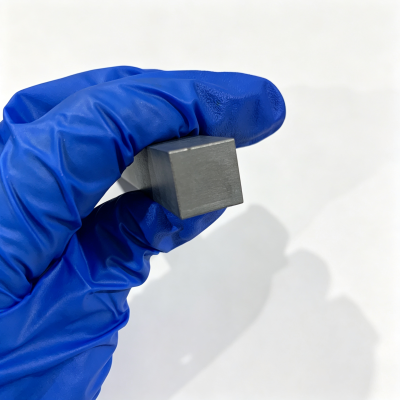
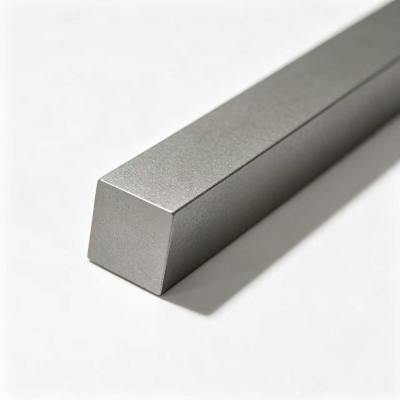
Solid carbide cutting tools are fully sintered tungsten carbide parts. The whole cross-section is WC-Co alloy, no steel backing. The shape can be carbide strips, rectangular blades, special profile cutters or drill blanks.
Every part of the tool shares the same carbide grade, hardness and wear resistance. There is no brazing joint. It can be ground repeatedly until the full piece is consumed, as long as clamping and mounting allow.
Carbide Tip vs Solid Carbide Comparison Table
| Parameter | Carbide Tipped Tool | Solid Carbide Tool |
|---|---|---|
| Structure | Steel/HSS body + brazed carbide edge | Full tungsten carbide, no steel substrate |
| Raw Material Cost | Lower, less carbide used | Higher, full carbide blank |
| Maximum Regrind Times | Limited, until carbide tip is ground away | Many regrinds, until full dimension is gone |
| Heat Resistance | Limited by brazing joint; overheat causes tip detachment | High heat resistance, no brazing weakness |
| Impact Resistance | Steel body absorbs shock well | Brittle overall; heavy shock causes cracking |
| Consistency of Hardness | Only edge area is carbide hardness | Uniform hardness across whole part |
| Main Risk | Brazing crack, tip pop-off under heat or impact | Body chipping, fracture under overload |
Carbide Tipped Tools: Advantages & Limitations
Advantages
- Lower unit cost, suitable for large-volume low-budget projects
- Steel base absorbs vibration and impact better than solid carbide
- Easier clamping, less risk of breaking during installation
- Works well on machines with less rigid structure and unstable feeding
Limitations
The brazing seam is the weakest point. Excessive cutting heat, heavy shock or wrong sharpening temperature can separate the carbide tip from the steel body. You cannot regrind past the tip thickness; once the carbide segment is gone, the blade must be replaced.
Brazing quality varies a lot between factories. Poor brazing creates hidden microcracks that lead to early tip failure.
Solid Carbide Tools: Advantages & Limitations
Advantages
- No brazing joint failure risk, stable under continuous high heat cutting
- Far more regrinding cycles, reduces long-term replacement frequency
- Uniform wear, no local detachment failure
- Can be made into narrow, precision profiles for slitting and fine cutting
Limitations
Solid carbide is brittle. Hard impact, sudden overload or misalignment can crack the whole blade. Initial purchase cost is higher. It requires diamond grinding wheels for sharpening, and needs rigid machine setup and careful handling.
How to Pick for Your Cutting Application
Choose Carbide Tipped Tools if:
- You have moderate impact, vibration and unstable feeding conditions
- Wood planing, general shredding and low-to-medium duty slitting
- You replace blades frequently and prioritize lower upfront cost
- Your sharpening operation only removes small amounts of material each time
Choose Solid Carbide Tools if:
- Continuous high-speed cutting, stable automated production lines
- Highly abrasive materials: particle board, fiberglass, filled plastics
- You need many regrinds and want to cut down tool change downtime
- Fine slitting, precision cutting and no tolerance for tip detachment
Typical Failure Modes & Troubleshooting
| Failure Symptom | Likely Tool Type | Suggested Fix |
|---|---|---|
| Carbide tip falls off during cutting or sharpening | Tipped blade | Improve brazing quality, reduce overheating, switch to solid carbide |
| Whole blade cracks after sudden impact | Solid carbide | Switch to tipped design or higher-toughness carbide grade |
| Edge wears out quickly but no detachment | Both types | Upgrade to finer grain or lower cobalt carbide grade |
FAQ
Q: Can carbide tipped blades be resharpened many times?
A: Only until the carbide tip thickness is consumed. Once you grind through the carbide segment and reach steel, the cutting edge loses wear resistance.
Q: Is solid carbide always longer lasting than tipped carbide?
A: Under stable, low-impact cutting: yes. Under heavy shock, solid carbide may crack quickly, and tipped tools can deliver better overall uptime.
Q: Can we use the same carbide grade for tips and solid blades?
A: Yes, YG6, YG8 and YG15 can be used for both. Tipped tools usually pick medium grain balanced grades; solid precision cutters often select fine grain carbide.