Home / All
Blog
- Rleey | Tungsten Carbide Wear Plates Manufacturer for Mining & Construction Abrasion ProtectionOct 10,2026This article discusses tungsten carbide wear plates used for mining and construction heavy machinery. It analyzes abrasive wear challenges from ore, gravel and aggregates, compares carbide with traditional steel liners, introduces grade selection rules, installation methods and typical application positions. FAQ section answers common questions to help global buyers select suitable carbide wear plates, extend machine service life and cut maintenance downtime and operating costs.
- Rleey | Polished Tungsten Carbide Drawing Dies Manufacturer for Steel Wire Drawing IndustryOct 10,2026This article focuses on polished tungsten carbide drawing dies widely used in steel wire production. It explains the working principle of wire drawing dies, benefits of high-precision polishing, carbide grade selection, critical die geometry parameters, common failure modes and maintenance tips. It helps wire drawing plant engineers and buyers select suitable polished carbide drawing dies to stabilize steel wire surface quality, maintain consistent dimensional tolerance .
- Rleey | Hard Alloy Parts: Key Procurement & Selection Tips for Machining ProjectsOct 9,2026Explore key procurement and selection tips for hard alloy parts in machining projects. Learn how to choose proper grades, check dimensional tolerance, evaluate wear resistance and match carbide parts for your machining applications. Avoid common sourcing mistakes for hard alloy components.
- Rleey | How Near-Net Shape Sintering Reduces Tungsten Carbide Custom Part Lead TimeOct 9,2026Custom tungsten carbide components often face long lead times caused by extensive post-sinter machining. Near-net shape sintering technology shapes carbide blanks close to final dimensions during powder pressing and sintering, cutting most grinding work. The material’s hardness, density and wear performance remain the same as fully machined carbide workpieces.
- How Surface Finish Affects the Service Life of Tungsten Carbide Piercing ToolsOct 9,2026Surface finish is a critical factor that decides the service life of tungsten carbide piercing pins and piercing tools. Rough sintered surfaces and finely ground polished surfaces behave differently during repetitive piercing operations. As-sintered carbide parts have natural sinter texture, which is suitable for low-tolerance piercing jobs, while polished ground carbide pins deliver smoother surface and longer tool life for high-precision metal piercing.
- Tungsten Carbide Component Customization: How We Match Drawings for Industrial ClientsOct 9,2026Industrial tooling buyers often need custom tungsten carbide components with unique sizes, profiles and tip shapes. VUILI’s carbide customisation workflow starts with technical drawing review, mould design or CNC machining planning, and material grade selection. Our engineering team checks dimensions, tolerance, application load and wear requirement before production.
- Why In-house Machining Helps Stabilize Tolerance for Your Carbide Tool BlanksOct 9,2026Tolerance instability is a common problem for outsourced tungsten carbide blanks, leading to assembly errors and tool failure during industrial piercing and cutting work. VUILI adopts full in-house machining including precision grinding, honing and profiling for carbide tool blanks, realizing one-stop production from sintering to finished processing.
- Industrial Sharpening Machine: Custom Carbide Blades for High Volume SharpeningOct 9,2026High-volume sharpening operations demand durable cutting components to reduce downtime and blade replacement frequency. Custom tungsten carbide blades are widely used on industrial sharpening machines due to exceptional wear resistance and edge retention. This article introduces the benefits of carbide blades for sharpening equipment, key custom design parameters, common blade failure modes, practical selection tips, and maintenance advice for continuous high-volume sharpening production.
- Fastener Cold Forging: Carbide Dies & Pin Cores Extend Production RunsOct 9,2026Fastener cold forging creates high-volume bolts, nuts and rivets, where die fatigue and premature failure directly reduce production output. Tungsten carbide dies and pin cores are widely used in cold forging lines for their high compressive strength, wear resistance and deformation resistance. This blog explains why carbide performs better than steel dies for fastener production, critical design and grade considerations, common failure modes of carbide dies and pin cores.
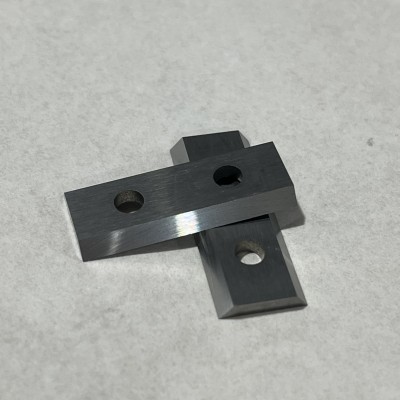
- Wood Cutting: Carbide Strips as Wear Parts for Woodworking MachineryOct 9,2026Woodworking machinery faces continuous abrasive wear from wood fibers, resin, sand and embedded debris during high-volume wood cutting operations. Tungsten carbide strips are widely adopted as durable wear parts and cutting edges for planers, jointers, chippers and other woodworking equipment. This article introduces the advantages of carbide strips over traditional steel blades, suitable carbide grades for wood cutting, critical machining parameters.
- Rleey | Tungsten Carbide Rectangular Strips for Wear-Resistant Industrial ComponentsOct 8,2026Explore the advantages of carbide long bars, including high hardness and wear resistance for cutting blades and wear liner applications.
- Rleey | Grade Selection of Tungsten Carbide Strips for Machining ProjectsOct 8,2026A complete material guide to select proper carbide grades for different working conditions of hard alloy rectangular bars.